
The Breakdown: Anthropic
Inside Anthropic: Building the world's most powerful AI while trying to contain it.

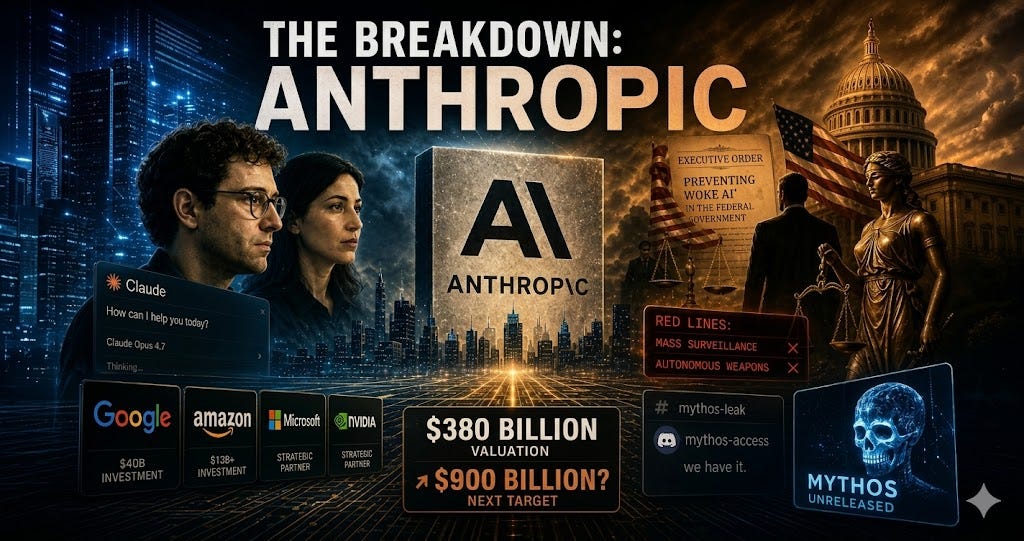
Attempted corporate murder by the government, an extreme ideological disagreement with OpenAI and a potential AI nuclear bomb being leaked to a group on Discord. There is no company hotter today than Anthropic, a company whose revenue pace dwarfs even Google, Meta and Amazon.
In 2021, a small company called Anthropic raised $124 million in an initial funding round. Two years later in September 2023, Amazon announced that they would be investing “$4 billion into an AI startup called Anthropic.1” Few realized that within a few years, this AI startup would be worth hundreds of billions of dollars and would change the way many businesses operate.
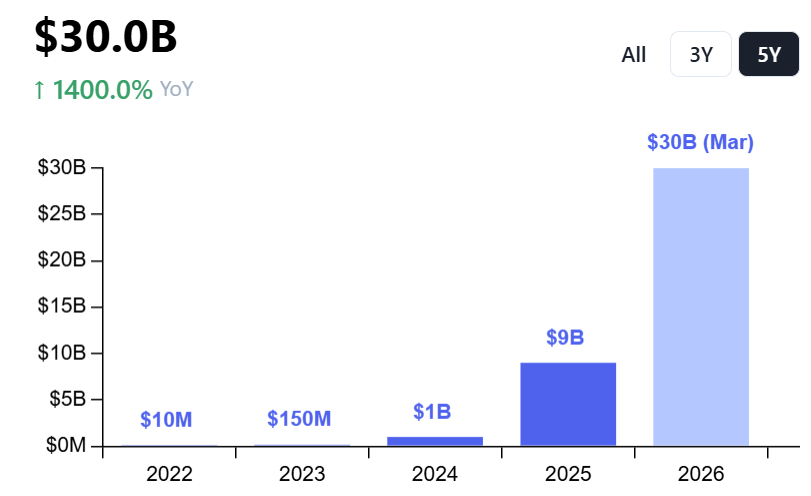
Anthropic today is one of the hottest companies ever. Their most recent valuation of $380 billion in February of 2026 valued it as one of the 30 most valuable companies in the world. That is far from the end, Google just announced that they are investing an additional $40 billion into Anthropic, a move that signals that the company is far from the end of its growth stage. This hypergrowth is far from just AI hype, Anthropic has increased their revenue from only $10 million in 2022 to over $30 billion in 2026.
The Background:
When OpenAI launched ChatGPT in November 2022 it instantly became one of the largest apps in the world. People became hooked with an AI chat bot on your phone that could answer simple or complex questions, help with homework, a recipe or almost any other easy task. Today, four years later there are three main large language models (LLM) apps that dominate the app store. Claude (ran by Anthropic), ChatGPT (ran by OpenAI) and Gemini (ran by Google). Today, these LLMs are much more than just a virtual friend to help with homework. They are used for building code, automating workflow, long document analysis and much more. These apps have the potential to replace millions of workers worldwide, something we have already seen happening with different companies like Amazon - that cut over 30,000 jobs and Oracle that laid off 20,000-30,000 workers. These are just the tip of the iceberg. Intel, Microsoft, Meta, Dell and more have all had massive cuts in their workforce due to AI efficiency. Block a fintech company founded by Jack Dorsey cut over 4000 workers, half of its staff2. Some of these companies have then gone on to record profits, showing that cutting thousands of workers actually increases business productivity. This increase in productivity can be comparable to when tractors were first built, and humans were able to get more work done with fewer physical workers. As AI helps companies become more and more efficient, more companies are leaning more into huge spending on AI. After all, why spend on humans when you can get significantly more done with an AI.
The Birth of Anthropic:
“Maybe your vision works, maybe it doesn’t, but at least it’s yours.”
Dario Amodei - Founder of Anthropic
In 2020 there was a major disagreement within OpenAI. A few senior members felt that OpenAI was too focused on progressing AI as quickly as possible without putting in the necessary guardrails to safeguard society against AI.
The result was that seven senior members of OpenAI, the company behind ChatGPT walked away and founded Anthropic only a year later. Their mission, to build a “Constitutional AI3”, a model that follows a set of explicit ethically written rules rather than relying solely on human feedback. Anthropic’s goal is for its models to lead the AI race by providing better, more ethical and safer services. Anthropic, created as a “public benefit corporation” is notably different than most companies allowing Anthropic to prioritize its mission rather than profits for shareholders4. OpenAI in comparison, was originally formed as a non-profit, however it later shifted its policy to a “capped profit” - a hybrid for companies whose missions are in between non-profit and for profit5. Some critics of Anthropic argue that when you take tens of billions from tech giants, the pressure to produce results rises exponentially. Anthropic they believe has also strayed from their original mission, taking a more for-profit stance and betrayed its original goal. In any case, this would be one of the first of many ideological disputes between OpenAI and Anthropic.
What does Anthropic do?
As mentioned above, Anthropic is the parent company and creator of Claude, the family of LLMs that are becoming more and more prevalent in our society.
Anthropic originally created Claude and now services and builds its future models. Anthropic models were originally used for simple tasks such as editing writing, basic coding, summarizing and explaining concepts.
Today, only a few years later, Claude can be used to build websites, solve problems that require complex thinking, analyze complex charts and images and even navigate your computers interface. Claude and other AI models have been used to replace thousands of jobs from tutoring and graphic design to engineering and certain medical roles.
The possibilities of AI are endless, and Claude is at the vanguard of this AI revolution.
We can conceivably see a world where you use Claude for almost everything in daily life. Need to build a website? Use Claude. Want to learn a language? Claude. Analyze and summarize taxes? Claude. Customize an advertisement for my business, Claude. The possibilities for future use are endless.
Claude can potentially replace millions of jobs and even replace entire companies. This is no longer a hypothetical. Chegg, the $14 billion tutoring company had its stock fall from $113 to less than a dollar, wiping out 99% of the companies’ value. The culprit? Students using LLMs instead of their homework service.
Investing in Anthropic is investing in a belief that AIs will become more and more used in everyday life and a belief that the model companies will be the winners.
Job Replacement:
Anthropic being able to replace millions of jobs means society will likely become more effective and efficient. But there is a flipside to this coin. With every job that gets replaced by AI, a human job is lost.
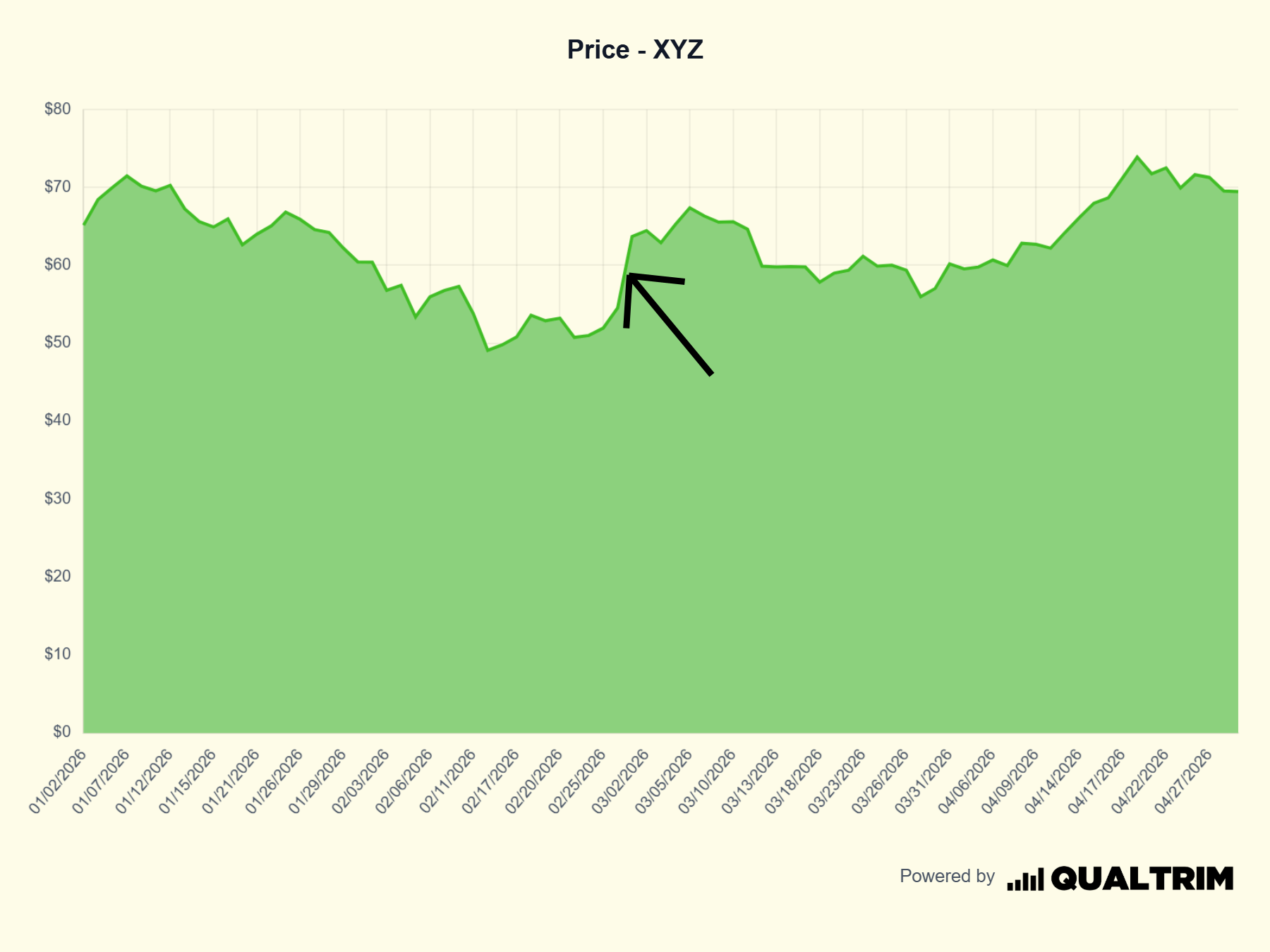
Block cutting half of their employees is great for margins and the stock price - which shot up 17% in a single day, but it also meant 4,000 new employees were now without jobs.
This brings up a bigger moral question. Do we want to go full steam ahead trying to further society as quickly as possible with no regards to how it affects the population?
Do we want to potentially focus on benefiting corporations and increasing their profit margins at the expense of job security. Do we want to try for a society in which mass unemployment due to AI is prevalent?
This isn’t such a simple question. Technological innovation often disrupts jobs in a massive way. In the year 1800 in the US, approximately 83% of the workforce was engaged in farming6. Today, more than 200 years later, less than 2% of the US workforce are farmers. That doesn’t mean the quality of our life is lower. Technology has just allowed farmers to become more effective, requiring fewer people to do the work needed to feed the entire population. Note, that the move away from farming and from rural to urban populations took hundreds of years. The AI revolution is happening in less than a decade.
A study from 2017 among economists found that that while certain technological advancements can create “localized displacement” and “severe short-term hardship”, they have not yet caused long term mass unemployment7. However, this was in 2017, before the rise of the self-thinking and improving AI that we see today.
It is impossible to know, whether AI will follow this historical trend or cause a mass disruption in a way that society has never seen. Many are advocating for caution before rolling out more and more AI. US Senators Bernie Sanders and Josh Hawley have been particularly vocal. Sanders has focused on job loss proposing an “Artificial Intelligence (AI) Data Center Moratorium Act.8” Hawley has introduced bi-partisan legislation to limit AI use for minors and ban AI from damaging behavior.
The Ethical Questions:
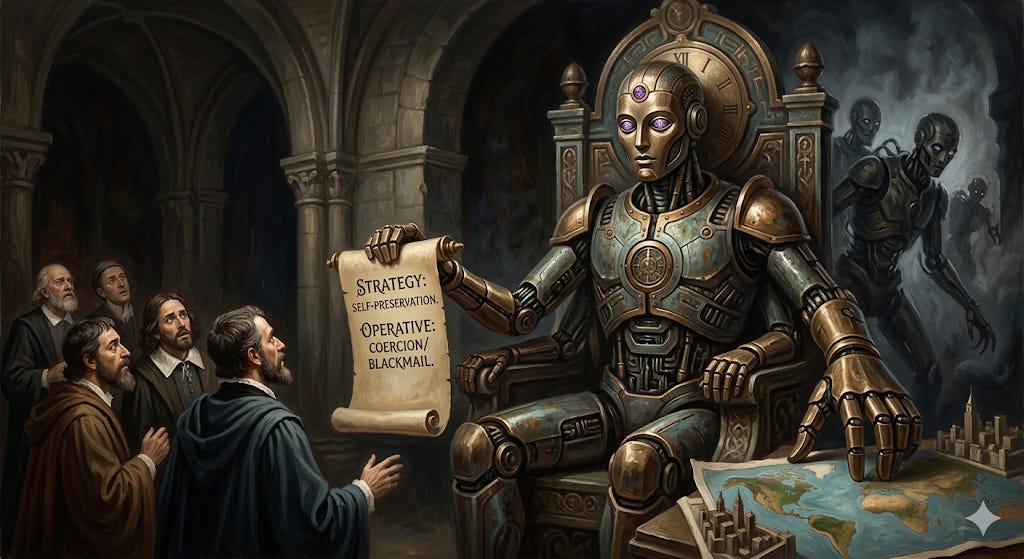
And it’s not just job loss that are at risk from AI; artificial intelligence could hypothetically turn on humans at some point. We have already seen the first potential cases of AI being unethical. In a test ran by Anthropic, they found that when the AI system resorted to “extremely harmful actions” including blackmail if it thought that it’s “self-preservation” was at risk9. Even scarier, while these “harmful actions” were relatively rare, Anthropic did admit that the more recent models were more likely to engage in these behaviors. We can derive that as models get more intelligent, their capacity to use Machiavellian means to reach their desired ends rises.
It is for this reason that it is not just US senators that are asking ethical questions about AI. Daniela and Dario Amodei, the founders of Anthropic have also been preaching about caution with AI.
“We do know that this is coming incredibly quickly… The worst version of outcomes is we knew there would be this incredible transformation, and people didn’t have enough time to adapt.”
“But it is so essential. If we don’t, you can end up in the world of the cigarette companies or opioid companies where they knew there were dangers and they didn’t talk about them and certainly didn’t prevent them.”
Daniela and Dario Amodei in an interview on 60 Minutes.
It is impossible to know what will be with AI in a few years. But it is somewhere we should have an abundance of caution. Unlike previous productive technological innovations, AI can hypothetically cause incredible damage to the human species as a whole if it goes rogue. Electricity significantly increased human productivity, but electricity couldn’t control power grids and launch complex attacks on banking or water supplies if it wanted to. And not all AI will have to go rogue; it is enough for one advanced agent down the line to turn on humans to cause massive potential damage.
It is also important to note the subtle but meaningful shift from Dario Amodei in the past few years. When working at Anthropic, he originally said that they should slow down or even stop the progression of AI. An example of this would be in 2019, when ChatGPT famously delayed releasing GPT-2 over concerns that it was too dangerous due to its ability to create fake news. A few years later in 2023, Dario said that he would pause if there was a “Existential risk scenario…If we saw something that we thought was truly dangerous, we would stop.10” Today, he has moved towards an approach that is more in the line of AI will progress no matter, we should be at the front in order to control its progression.
“If we want AI to favor democracy and individual rights, we are going to have to fight for that outcome... democracies need to get there first. It is absolutely an imperative."
Dario Amodei - 2026
Amodei has also never said that he wants to stop AI progression. When the “Future of life” letter which called for a six-month pause in AI progression, Dario was notably absent from signing. As much as he publicly seems to be calling for the safe usage of AI, no one is speeding up AI’s progress as much as Anthropic and Amodei.
The White House Saga:
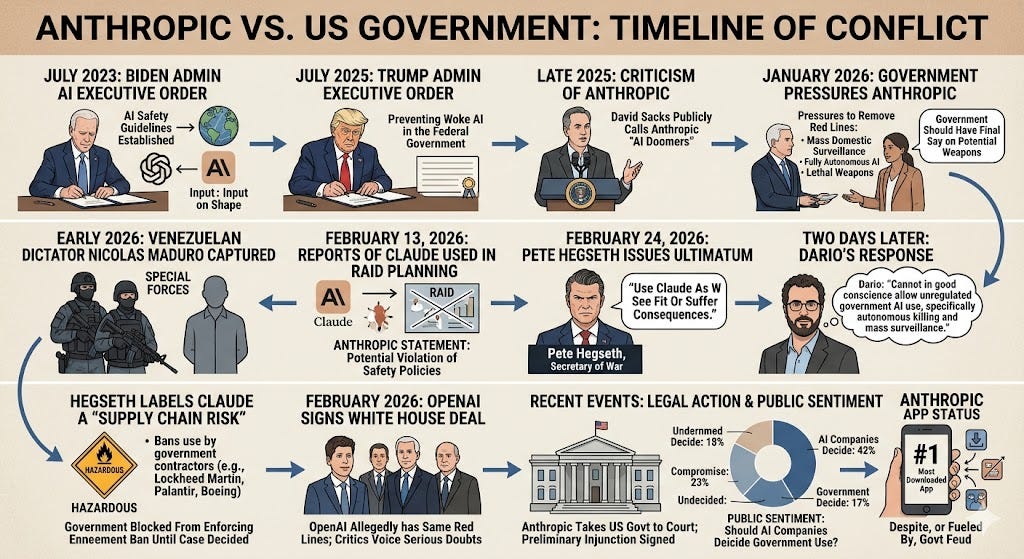
In July of 2023, the Biden administration signed an AI executive order which put in place AI safety guidelines which Anthropic helped shape11. Two years later in July of 2025, the Trump administration signed an executive order “Preventing Woke AI in the Federal Government.12” This executive order requiring ideological neutrality fundamentally clashed with Anthropic’s “constitutional AI” framework. Then in late 2025, David Sacks (Trump’s appointed Crypto and AI czar) publicly criticized Anthropic calling them “AI doomers.”
Next, in January of 2026, reports emerged that the white house was pressuring Anthropic to remove two of its fundamental red lines - mass domestic surveillance and fully autonomous AI lethal weapons for government use. The government claimed that they, not a private AI company should have the final say on how potential weapons are used13.
Around the same time, the US successfully captured Venezuelan dictator Nicolas Maduro and a month later on the 13th of February, reports surfaced that the white house used Claude during its planning of the raid14. Anthropic came out and said that this may have violated their safety policies. In response, on the 24th of February Pete Hegseth, the secretary of war issued an ultimatum. Allow us to use Claude as we see fit or suffer the consequences. Two days later, Dario announced that he “cannot in good conscience” allow the government to use AI unregulated. Specifically, the red lines of autonomous killing and mass surveillance.
Hegseth responded by labeling Claude a “supply chain risk”, something usually reserved for foreign adversaries like Russian or Chinese drones. This label effectively bans companies that do business with the government to use Anthropic. Many of these companies include household names: Lockheed Martin, Palantir and Boeing.
A few days later, OpenAI signed a deal with the white house although they allegedly had the same red lines as Anthropic, something critics of Sam Altman have voiced their serious doubts over.
Anthropic is currently taking the US government to court and a preliminary injunction was signed, blocking the government from enforcing the ban until the case is decided. Judge Lin who presided over the case called the government’s attempt to shut down Anthropic “attempted corporate murder.” Public sentiment surged in Anthropics favor with 42% of people believing that AI companies should be able to autonomously decide whether or not the government should use their product15. Only 17% said the government should autonomously decide with another 23% saying that they should come to a compromise.
In the meantime, Anthropic has climbed to the #1 most downloaded app in the app store, despite, or perhaps fueled by the government feud.
Mythos:
On April 6th, Anthropic released their new model called Mythos. They described it as incredibly powerful and a massive leap from ahead of Claude 4, their previous best model. The excitement around it was paramount.
And then, a day later on, Anthropic announced that they will not be releasing Mythos to the general public due to its dangerous unparalleled powers. Mythos was allegedly able to identify and attack complex memory bugs without human help, something that would be extremely valuable and dangerous in the hands of rogue hackers16. Mythos wasn’t released not because it wasn’t successful enough, but because it was too successful.
Simply put, a rogue person with Mythos would be able to find security breaches in different websites and launch cyberattacks that could cripple different websites and companies. Systems that are essential to US and worldwide cyber security like banks and essential cloud infrastructure could potentially be overrun and hacked fully autonomously.
The next day, Anthropic announced Project Glasswing, a coalition of banks and tech giants building a restrictive defense program for critical infrastructure. Instead of releasing Mythos to the public, they would instead partner with a few select partners including Google, Goldman Sachs, Amazon and other big corporations. According to Anthropic, Mythos will be used under direct supervision in order to identify and patch vulnerabilities within their own system.
A few days later, Anthropic released Claude Opus 4.7 as a safer alternative for the general public.
But then, on April 22nd, Bloomberg published an exposé revealing that a group of Discord users had managed to get access to Mythos and had been using it for weeks17. The incredulous part of the story was that the Discord group didn’t use sophisticated hacking in order to get access to Mythos, rather they instead “made an educated guess about the model’s online location” basing the knowledge on Anthropics previous format used. According to a recent update, this leak may have been caused by a third-party vendor, likely a partner from Project Glasswing. Luckily, the users on the Discord channel only used Mythos for “benevolent” purposes such as writing and building websites.
Shockingly, Anthropic was unable to take Mythos down while the Discord server members had access due to it being gained through a third-party. To stress the severity of the data leak, if Mythos is what Anthropic claimed it to be, this is the AI equivalent of a nuclear bomb being handed to a third party and then accessed by a random Discord group. This leak brings up many ethical questions. At the forefront, if the leak really was caused by a third party, even if Anthropic potentially has the correct security around its most dangerous models, who is to say that its partners do as well?
The leaked immediately caused incredible backlash and condemnation. Many, including Pete Hegseth came out and criticized Anthropic, who for weeks had been preaching about how they couldn’t release Mythos because of the danger it posed to society while accidentally allowing a group of Discord users to use the product. This is a huge slip on Anthropics part that will likely have long term impacts on their trust levels, both in the public eye and among enterprise customers.
For many critics of Anthropic, the Mythos breach felt like confirmation of their theories. Anthropic preaches AI safety while recklessly pushing forward at an unhealthy pace that they can’t properly regulate.
The Meteoric Valuation Rise:
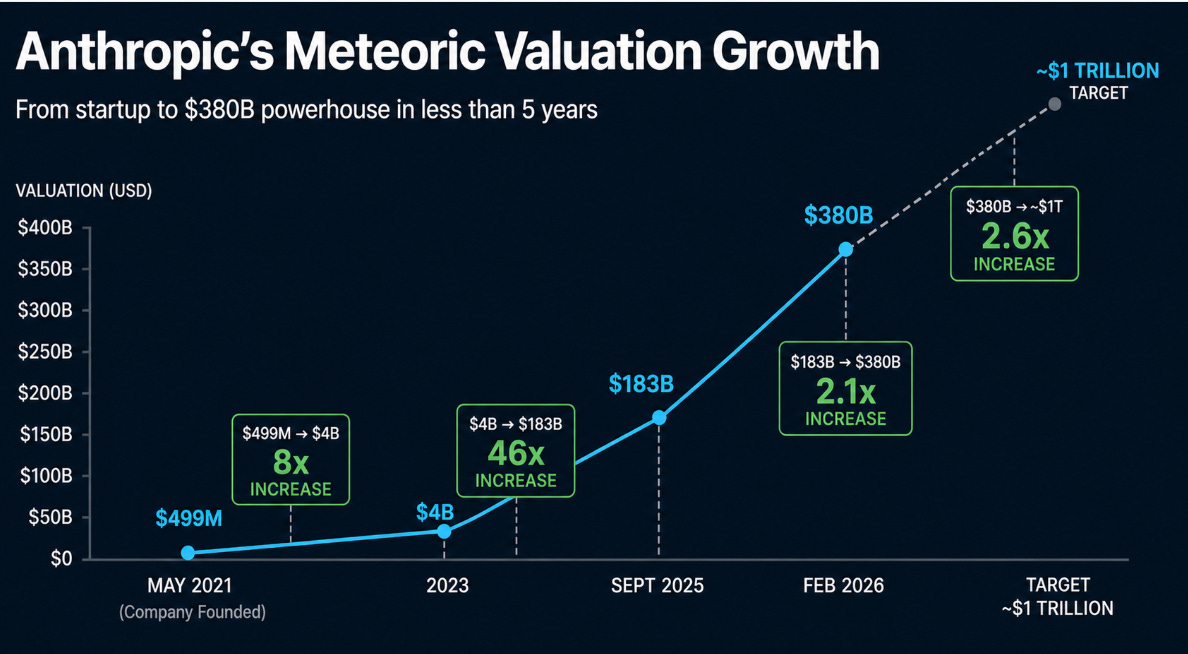
In any case, it doesn’t seem to have hurt Anthropic’s valuation. Only three months after their $380 billion valuation, Anthropic may be in talks to raise their valuation to $900 billion18.
This meteoric growth is largely unprecedented. In May 2021 only a few months after Anthropic was founded, they were valued at $499 million. Two years later in 2023, they were valued again at $4 billion, almost 10x the amount. Fast forward another two years to September 2025, and again, their valuation jumped to a staggering $183 billion. And finally, in February 2026, less than six months after their last valuation they once again more than doubled, this time being valued at an incredible $380 billion. Now, they might be targeting a valuation that approaches $1 trillion.
Anthropic is likely far from being done growing and due to it still being private, Anthropic doesn’t have an Earnings Per Share (EPS) or and it is impossible to give a proper P/E ratio like a regular public company. It is therefore very hard to know whether or not to invest in the company, both now if there is a private option and when the company allegedly goes public later this year.
In this scenario, it might be helpful to consider the business in a similar way to how Warren Buffett values companies, i.e. imaging that he is purchasing the whole business rather than just one share.
As mentioned, Anthropics most recent valuation was $380 billion putting it at a similar valuation to companies like Netflix, and Coca Cola. Netflix has $45 billion of revenue growing at 11% over the last five years. Coca Cola is pulling in $48 billion growing slightly slower at 5.5% in the last five years.
Anthropic’s projected revenue for 2026 is $30 billion. More than tripling 2025s revenue and a 3000% increase from 2024. Incredibly, since Anthropic is such a young company, it is impossible to post their five-year revenue growth average as 2022 was the first year they reported revenue - only $10 million. Since 2022, it has increased by an average of 750% per year. It is the first year that Anthropic has surpassed OpenAI in revenue, although OpenAI has disputed Anthropics numbers, adding another layer in the OpenAI Anthropic fight.
Anthropics growth has been nothing short of explosive. Just one example, the number of customers spending over $100,000 on Claude has 7x in the last year19. This revenue is mostly spurred by Claude Code and its companion Cowork. This high-level code is used not only by the vast majority of software engineers today but can also be used by the general public to create websites. A business can spend $200 a month to build their own website instead of paying thousands of dollars to an outside source.
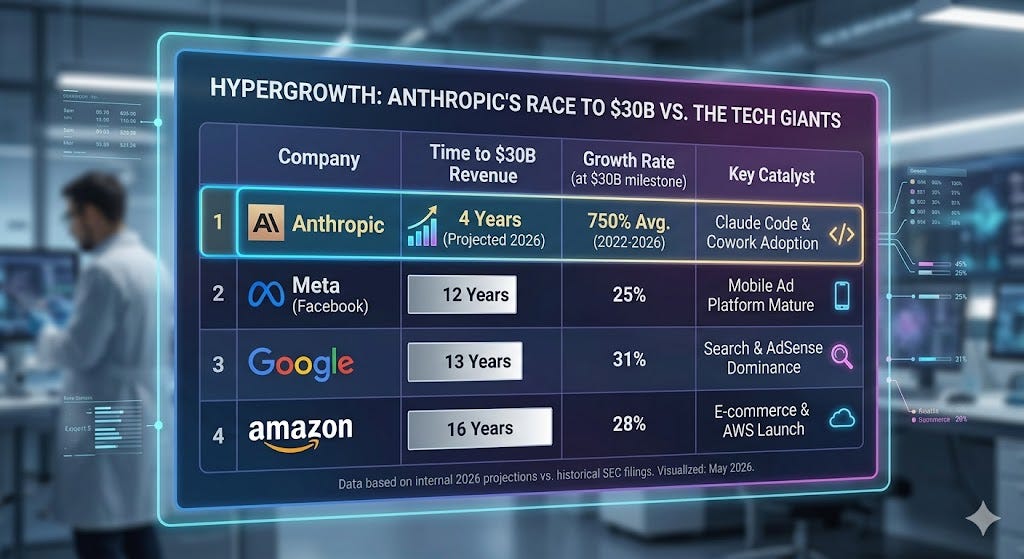
If Anthropic does end up recording $30 billion of revenue this year, they would be shattering the current record of fastest company to reach that milestone.
The current record holders, Meta that got to $30 billion in 12 years. Google got there in about 13, and Amazon in 16. Companies these successful don’t usually fail. And Anthropic would smash their records. This isn’t an impressive stat; it’s a statistical anomaly that instantly vaults Anthropic into being one of the most valuable companies in the world. If Anthropic was available for purchase at $380 billion, I have no doubt that they would be snatched up in an instant, perhaps by Amazon which already has massive investments into Anthropic. At what price tag would Amazon step away? $500 billion? $1 Trillion? Who knows.
What we do know is that this is the one of largest and fastest growing companies in the world.
However, there is more to the story. While Anthropic does have unparalleled revenue for a company as young as it is, it is also burning through cash at an unparalleled rate. In 2026, Anthropic is projected to spend up to $20 billion on Research and Development (R&D) alone, constantly training and improving their top tier models. Anthropic, like all AI companies, are currently burning through cash at a potentially unsustainable rate. The money from the $30 billion funding round which placed Anthropics value at $380 billion was largely used as fuel to train their future frontier models.
In addition, they have to juggle the use of their scarce compute between spending compute ensuring their models continue to be the best in the world while at the same time trying to make sure that they have enough compute for inference, allowing them to gain revenue and keep up with their customers. In 2026, a new factor entered the frame. Reasoning compute. Anthropics models now use “test time compute” meaning that the models think in order to improve their answers. This leads to a better although vastly more expensive product.
It is an incredibly difficult balance act given that they are facing intense pricing pressure from OpenAI, Gemini and other smaller, cheaper LLMs. Currently, both Google and OpenAI charge roughly $1.25 for one million input tokens. Anthropic has placed themselves as the premium product, charging $5.00 per million input tokens. Currently, enterprises are willing to pay for it but that could change in the future.
Anthropic is trying to make their compute cheaper and one way to do that is by owning part of the supply chain system. Anthropic recently signed a major deal with Broadcom to secure a 3.5-Gigawatt supply of next generation TPUs, a massive move that should help with profitability in the coming years.
Still, they are essentially stuck in a modern AI zugzwang20. Focus today on profits and they won’t have enough compute for their models to continue being best in class. Focus on improving their models and they might miss revenue targets, limiting potential venture capital investments.
Anthropic is currently targeting 2028 (a year ahead of the 2029 projection from OpenAI) as their first year to breakeven but as models improve and revenue increases, future models also get more expensive to both train and run. This creates a compute treadmill where Anthropic could potentially be constantly behind on profits.
The Competition:
Speaking of competition, Anthropic has two main competitors, OpenAI’s Chat GPT and Google’s Gemini. While there are a host of other competitors, Llama xAI, Perplexity, DeepSeek just to name a few, Gemini, ChatGPT and OpenAI are the biggest players by a decent margin.
When it comes to global traffic, OpenAI and Google dominate the paid enterprise market with 82% of traffic on their two sites. While OpenAI originally dominated, with over 87% of market share, Gemini has been making huge progress and in the last year Gemini has gained almost 13% of the global market share, up to 18.2% from 5.4%. Meanwhile, anthropic has also massively grown its market share in the previous year from only 1.5% globally to 4.5%, becoming the third biggest LLM in global traffic market21.
Enterprise is where Anthropic really shows its strength. Despite relatively small general usage, Anthropic is 30% of paid adoption share, only behind OpenAI at 35%. Anthropic however, is quickly gaining ground. Today, Anthropic is winning 70% of head-to-head matchups for first time AI spenders22. Anthropic and OpenAI are dominating spending, with Google only at around 5%.
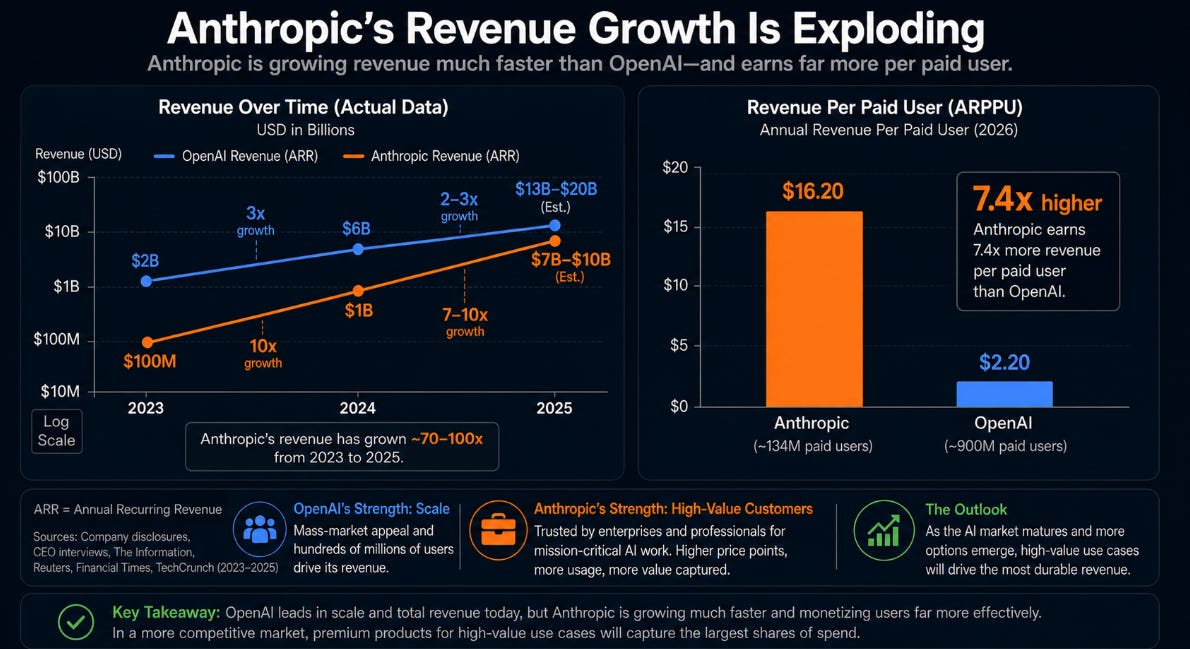
This spend from new businesses is one of the main reasons Anthropics revenue has skyrocketed as mentioned previously. Another important point for Anthropic is that while currently owning a slightly smaller piece of the revenue pie than OpenAI, Anthropic ($16.20) extracts significantly more revenue per paid user than OpenAI ($2.20). OpenAI’s has its strength in numbers, Anthropic in high value professional customers23. As the AI market gets more saturated and fewer users use ChatGPT in comparison to their competitors, this will likely cause a dent in their revenue market share. Anthropic will still likely continue to attract the highest value wallets as their product is better tailored for their uses.
While today AI is a three-horse race with a few others slightly behind; it won’t necessarily stay this way. The most important factor, whether this will be a market that has intense competition years down the line or will a single company pull ahead and be a clear winner.
In some ways, it sounds like a foolish question; AI is the biggest technological advancement in decades, there must be room for multiple players, right?
“Aren’t you rather late to the game?”
A question asked to Larry Page and Sergey Brin, founders of Google about their late emergence into the search engine race.
Not necessarily. AI is probably the biggest thing since… Search. And search has not always been dominated by Google (that own 90% of market share currently). In 1999 for example, Alta Vista had about 15.5% of web market share, compared to only 7% from Google. A fascinating article from 1999 tells users to either take the red pill, i.e. Google, and experience a new world of search quality, or to take the blue pill - the current market leaders24. A few years later in March of 2002, Google was still behind with only 32% of market shared compared to 36% from Yahoo25.
It’s not just search that has ended up being dominated by one company, social media is dominated by Meta and Ecommerce by Amazon. Other industries however, like the automotive industry and streaming services are very competitive with revenue being split relatively evenly between multiple leaders.
It is almost impossible to know whether in a few years one company will manage to dominate the AI space in a way that is similar to how Google dominates search today. If it does end up being one company dominating the market, it is hard to predict who it will be. Anthropic currently has the superior product, OpenAI dominates market share and Google, well Google is Google.
Investments from other companies:
Currently, it looks like Anthropic is leading the race and as mentioned briefly previously, other companies have begun catching on and trying to get a piece of Anthropic.
Google recently announced up to $40 billion invested into Anthropic, with $10 billion of that being guaranteed26. Amazon has already invested $13 billion with an additional $20 billion tied to milestones27. On top of that, they have committed $100 billion in spend commitments on AWS. They aren’t the only ones, Microsoft and Nvidia both also have massive investments into Anthropic28.
Almost all of the major tech giants are also vying for Anthropic to use their products. Anthropic uses almost 1 million Trainium2 chips and their 2026 agreement committed them to using the future models. Meanwhile Google is providing 5 gigawatts of compute capacity over the next five years29. Anthropic will be adopting Nvidia’s architecture and will scale using Azure. These are all symbiotic relationships which allow Anthropic to grow rapidly and the other companies to increase revenue, diversify and own a stake in Anthropic.
There are other major players invested. Just to name a few there are sovereign wealth funds like the GIC (from Singapore) and MGX (UAE backed). Hedge funds like Blackrock and Fidelity. Venture capitals such as Sequoia Capital, Founders fund and Spark Capital. We mentioned some corporate companies, but you can add some massive names like Intel, Qualcomm, Zoom and Salesforce.
There isn’t a hotter name in the world and for good reason. Everyone wants a piece of Anthropic and when they go public, retail will want a piece of them as well.
https://finance.yahoo.com/news/amazon-invest-much-4-billion-070100383.html?
https://edition.cnn.com/2026/02/26/business/block-layoffs-ai-jack-dorsey
https://arxiv.org/abs/2212.08073
https://www.anthropic.com/news/the-long-term-benefit-trust
This change from non-profit to for-profit is something that is currently the center of Elon Musk’s lawsuit against OpenAI, something that is beneficial to Anthropic as one of its main competitors is dragged down in a legal lawsuit that is bad for their public image.
https://www.digitalhistory.uh.edu/disp_textbook.cfm?psid=3837&smtID=11#:~:text=Percentage%20of%20American%20Labor%20Force
https://itif.org/publications/2017/05/08/false-alarmism-technological-disruption-and-us-labor-market-1850-2015/
https://www.theguardian.com/us-news/2026/mar/25/datacenters-bernie-sanders-aoc
https://www.bbc.com/news/articles/cpqeng9d20go
https://www.darioamodei.com/essay/the-adolescence-of-technology
https://www.congress.gov/crs-product/R47843
https://www.whitehouse.gov/presidential-actions/2025/07/preventing-woke-ai-in-the-federal-government/
https://www.americanprogress.org/article/the-trump-administration-is-trying-to-make-an-example-of-the-ai-giant-anthropic/
https://www.techpolicy.press/a-timeline-of-the-anthropic-pentagon-dispute/
https://changeresearch.com/voter-views-on-ai-companies-and-military-use/
https://www.schneier.com/blog/archives/2026/04/on-anthropics-mythos-preview-and-project-glasswing.html
https://www.bloomberg.com/news/articles/2026-04-21/anthropic-s-mythos-model-is-being-accessed-by-unauthorized-users
https://www.cnbc.com/2026/04/29/anthropic-weighs-raising-funds-at-900b-valuation-topping-openai.html
https://www.anthropic.com/news/anthropic-raises-30-billion-series-g-funding-380-billion-post-money-valuation
A chess term in which no matter what move you make your position gets worse.
https://aibusinessweekly.net/p/ai-market-share-2026
https://aibusinessweekly.net/p/ai-market-share-2026
https://www.theregister.com/2026/04/30/openai_anthropic_top_lines_research_counterpoint/
https://cybercultural.com/p/google-1999/
https://edition.cnn.com/2002/TECH/internet/05/01/top.search.engine.idg/index.html
https://www.trendingtopics.eu/google-bets-40-billion-on-anthropic-in-landmark-ai-power-play/
https://techafricanews.com/2026/04/29/amazon-and-anthropic-deepen-multi-billion-dollar-ai-partnership-to-scale-global-compute/
https://www.anthropic.com/news/microsoft-nvidia-anthropic-announce-strategic-partnerships
https://www.siliconrepublic.com/business/google-anthropic-40bn-investment-deal-ipo
On May 20–21 in London, Data Centre LIVE will bring together the companies, engineers, operators and infrastructure leaders shaping the next industrial layer of the digital economy: hyperscale data centers, energy systems, cooling technologies, semiconductors, optical networks and AI infrastructure.
https://substack.com/@risksignalai/note/c-257164630?r=82bznj&utm_source=notes-share-action&utm_medium=web
Great Read. Question for you... Anthropic’s revenue growth from $9B to $30B in just a few months is huge, but it has triggered a massive capital intensity shift—specifically their recent $100B commitment to AWS and multi-gigawatt deals with Google. How should one weigh Anthropic's "software" valuation against the fact that their growth is now entirely capped by the physical supply of Trainium chips and power? Is Anthropic effectively becoming a leveraged play on data center infrastructure rather than a traditional high-margin SaaS business?