
The Breakdown: OpenAI
Inside OpenAI: The AI that changed the world as we know it.

On November 30th 2022, one tweet consisting of fewer than 10 words changed life as we knew it.1
“today we launched ChatGPT. try talking with it here:
ChatGPT was introduced and it immediately took the world by storm. Within only five days, the app became the fastest app ever to reach one million users.2 Two months later in January 2023, the app set another record when it reported 100 million monthly active users.3 In comparison, TikTok took nine months to hit that milestone, Instagram took over two years.
And the company didn’t slow down. Last month ChatGPT became the fastest app ever to reach one billion monthly active users.4
And yet, the app has also been bogged down by lawsuits from everyone from Apple and Elon Musk to the state of Florida and families. Its largest competitor, Anthropic, seems to be dominating enterprise clients and recently open source models have improved at rapid paces, begging the question of whether closed source models are really the future.
OpenAI is one of the most fascinating companies ever. They are both record-setting and have changed life as we know it and somehow seemingly “passed its prime” and the chatbot of the past.
This is the story of OpenAI.
Welcome to The Private Ledger - an independent, research publication that focuses on breaking down private companies and macro trends surrounding IPOs.
📈 You’re reading my latest breakdown into a private company. If you enjoy the research, make sure to like & subscribe to receive much more like this, weekly!
The Background:
When OpenAI launched ChatGPT in November 2022 it instantly became one of the fastest growing apps in the world.5
People instantly became hooked with an AI chatbot on their phone that could answer simple or complex questions, help with homework, a recipe or almost any other easy task. Today, four years later there are three main large language models (LLM) apps that dominate the app store. ChatGPT (run by OpenAI), Claude (run by Anthropic), and Gemini (run by Google). These LLMs are used for automating workflow, writing code, long document analysis and much more.
These apps have the potential to replace millions of workers worldwide, something we have already seen happening with different companies like Amazon - that cut over 30,000 jobs and Oracle that laid off 20,000-30,000 workers. These are just the tip of the iceberg. Intel, Microsoft, Meta, Dell and more have all had massive cuts in their workforce due to AI efficiency. Block, a fintech company founded by Jack Dorsey cut over 4000 workers, half of its staff.6 Some of these companies have then gone on to record profits, suggesting that replacing thousands of workers with AI might actually increase business productivity.
A brief caveat, cutting employees can increase productivity regardless of AI. In addition, it’s not always clear that there is a 100% correlation between AI and the layoffs. A CEO announcing a layoff of 5,000 people because of “AI innovation” will be seen as “genius and efficient”, a CEO doing the same layoff because of “overhiring” will not get the same praise. It is clear the direction the average CEO will take.
As artificial intelligence helps companies become more efficient, more companies are leaning more into huge spending on AI.
A brief timeline of OpenAI:
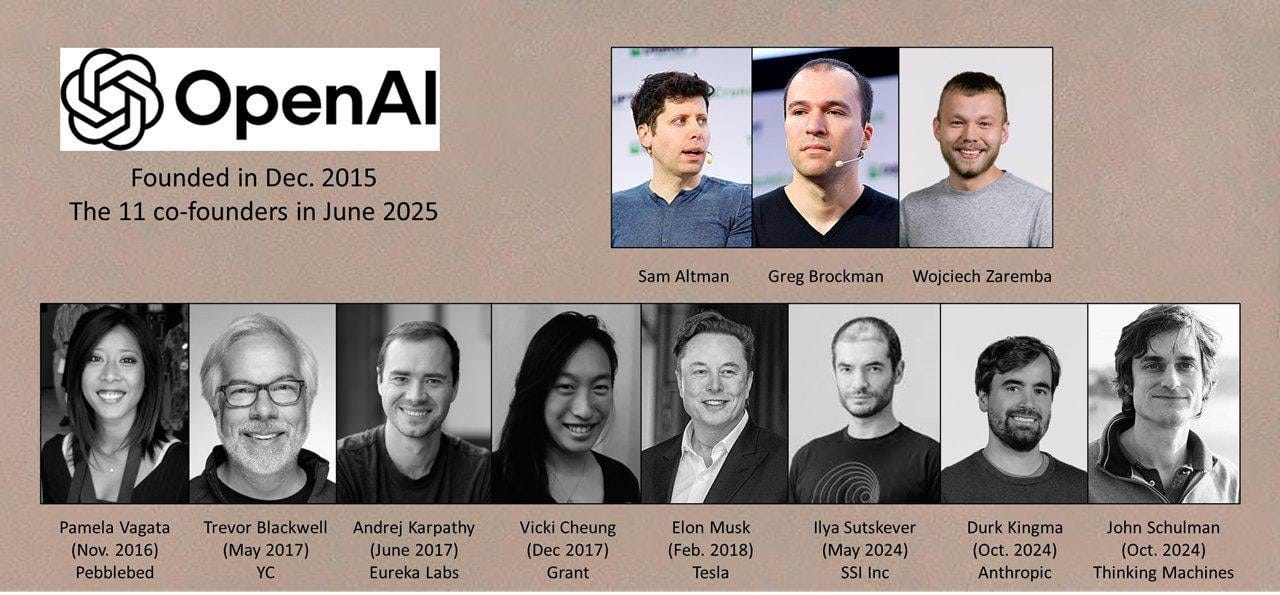
OpenAI was founded in December of 2015 by a group of 11 visionaries, the most famous of whom are Sam Altman - who currently serves as the CEO, Elon Musk - who left the company in 2018 and Ilya Sutskever - who left the company in 2024.
Originally founded as a non-profit, OpenAI was created with the goal of furthering AI for the benefit of humanity rather than profits.7
“OpenAI is a non-profit artificial intelligence research company. Our goal is to advance digital intelligence in the way that is most likely to benefit humanity as a whole, unconstrained by a need to generate financial return. Since our research is free from financial obligations, we can better focus on a positive human impact.
We believe AI should be an extension of individual human wills and, in the spirit of liberty, as broadly and evenly distributed as possible. The outcome of this venture is uncertain and the work is difficult, but we believe the goal and the structure are right. We hope this is what matters most to the best in the field.”
In 2018, OpenAI released its first ever GPT model. GPT-1 was the first large language model that OpenAI ever released and was capable of answering simple questions. It had 117 million parameters, which sounds like a lot until you realize today’s models have trillions of parameters. GPT was extremely basic and even questions such as “How are you today” would usually stump it.
In February of 2019 came OpenAI’s first major and very controversial change. OpenAI decided to change from a non-profit to a capped-profit model and in the same year they announced a major strategic partnership with Microsoft. This would later become the source of major controversy and a later lawsuit from Elon Musk which we will dive into later in the piece.
In June 2020, GPT-3 was released. GPT-3 was a major improvement over previous models and was able to complete more complex tasks.
Two years later in November of 2022, OpenAI released GPT-3.5 to the general public. This was the original ChatGPT as we know it today. GPT-3.5 was a major improvement over GPT-3 specifically in its utility and ability to hold human conversations without wandering off to random topics.
Then, in November 2023 a year after GPT’s launch, the board at OpenAI fired Sam Altman. After huge public backlash, they decided to bring him back. This saga was one Sam Altman said was “extremely painful for me personally” and one that shaped both Altman individually and OpenAI as a company.
Despite the whole saga, OpenAI hardly slowed down and in the years following have continued expanding and improving its products, releasing new models capable of increasingly complex tasks.
Today, ChatGPT is the leading LLM by usage and although its percent of market share has continued to shrink year after year, total usage has continued to climb. Perhaps more importantly, they have successfully doubled (or more) revenue every year since releasing ChatGPT, climbing to an estimated $41 billion in ARR in July of 2026.
That being said, the road has been rocky and from the original eleven founders, only three of them remain at OpenAI.
What does OpenAI do?
OpenAI originally created ChatGPT and now services and builds its future models. Besides developing ChatGPT, OpenAI also has developed Codex, an AI agent specifically focused on coding and software tools. Codex is one of the big drivers of revenue as it specifically targets high value enterprise customers.
Today, ChatGPT can help with almost any task from editing your resume and suggesting where you should apply to building websites.8
ChatGPT’s chatbot and Codex are the two primary uses of ChatGPT but OpenAI also offers image generation, (such as the cover photo for this article,) enterprise tools and an AI chatbot that you can chat with.
Recently, OpenAI also unveiled their first chip developed in partnership with Broadcom that will be used to lower compute costs and increase efficiency. The chip, named Jalapeño, is scheduled to be released in late 2026.
With Google integrating Gemini into the search and Meta integrating their LLM into WhatsApp, likely the vast majority of those using the internet on a daily basis are using LLMs in some form or another. I personally have used ChatGPT for everything from writing bureaucratic emails to helping me with tips for improving my Substack and I recognize that I am only scratching the surface with my current usage.
The Non-Profit Saga:
It is unclear whether the original founders of OpenAI realized how much their product would change society when they began working on it just over a decade ago. What is clear is that in the past decade their view on the company has shifted.
While originally founded as a non-profit in 2015, in 2019 the company made their first steps towards a for-profit model moving to what is called a “capped profit” model. In October of 2025, they finalized the transition into being a fully for-profit company.
This shift caused immense pushback from both the public and some of the original founders including Elon Musk. Those against the shift argued that by moving the company from a non-profit to a for-profit business model, they had betrayed the original goal of the company.
OpenAI argued that being a non-profit was unsustainable long term due to the huge costs associated with training AI models and the high salaries they needed to offer in an increasingly competitive AI landscape. Another factor was likely investor pressure. Private equity had poured billions of dollars into OpenAI and they were looking for the next trillion dollar company, not a non-profit company focused on bettering society.
This explanation was not sufficient for Elon Musk, who in March of 2024 officially sued OpenAI, a lawsuit that would end up lasting over years. Musk, who had spent between $15-38 million of his own money on OpenAI felt betrayed about their transition.9

While Musk’s case was eventually dismissed, the jury ruled against him because he had taken too long to file the case as the three year statute of limitations had already passed.
Notably, the jury did not decide on the merits of Musk’s arguments but rather simply due to the fact that the statute of limitations had passed. If Musk had filed the case a few years prior, the verdict could very possibly have been different.
More importantly, this is one of the many question marks surrounding OpenAI. As a non-profit company, their mission was to advance AI and society rather than focusing on profits. With the transition to a for-profit company, one has to ask the question whether the original mission statement is still what is leading the company, or is it simply profits ahead of everything else.
The Stickiness Problem:
One of the large challenges that OpenAI faces going forward is the lack of stickiness in their product. This isn’t specific to them but industry-wide. Someone using ChatGPT in order to generate images will switch to Gemini when Gemini releases a new model that focuses on image generation.
As more LLM’s (including open source models) improve and become usable for everyday life, AI companies run the risk of their product becoming entirely commoditized. Leading companies with direct access to users have already begun to realize this and implement their models directly into their products.
Google has already implemented Gemini into Google search, Meta has added Meta AI into WhatsApp, Instagram and Facebook. X, (formerly Twitter) has implemented Grok into their platform.
The goal of all these platforms is clear: keep their users on the platforms rather than have the users leave the platforms. The biggest losers of AI models increasingly bridging the gaps are leading companies developing LLM models like Anthropic and OpenAI who need users on their websites in order to profit.
I wanted this piece to be as complete as possible so I decided to reach out and pick the brain of one of the leading AI experts on Substack Alpha with AI.
“I use these models all day for my own research, so I probably see this race differently from most people watching it.
Nine hundred million people use ChatGPT every week, by the company’s own last count, and roughly fifty million pay. That gap is the whole story. Users picked ChatGPT in a day and they can leave just as fast.
The stickier thing is when a business builds its actual work around a model. Reading documents, writing code, handling customers. At that point leaving is not switching apps, it is a rebuild. That is the war OpenAI has to win from here.”
That doesn't mean that OpenAI doesn’t have any chance of success long term. With almost a billion weekly users, ChatGPT is by far the largest LLM in the world. That isn’t a minor feat and presents a legitimate competitive moat.
Skeptics will point out that the first mover doesn’t always win the race. In fact, the largest technological innovation in the 21st century prior to AI was search, in which the company that won arrived late to the party. In fact, even as Google moved into search, the founders of Google were asked the following question:10
“Aren’t you rather late to the game?”
Google was late to the game, and they ended up dominating. In my article for Anthropic, I argued that a similar result might happen with Anthropic which was founded six years after OpenAI.

Still, there is no question that being first is a huge advantage and is the preferable place to be. An extremely active user base of over a billion users is a legitimate moat, at least in the short-to-medium term.
Total Addressable Market - TAM:11
When it comes to TAM, it is very hard to quantify OpenAI’s TAM. After all, how can you decide what the total addressable market can be for a company or a technology revolutionizing the world as we know it today.
What we can do is break OpenAI into three categories:
Current TAM: Where they are generating revenue today.
Near-future TAM: Short term revenue that they can generate in the next few years.
Long-term potential TAM: Alongside their current revenue streams expanding, these are more speculative bets that can come to fruition years down the line.
By treating the TAM as three separate entities rather than grouping them all together, we are able to have a significantly better understanding of where the company is situated currently. This blurring of the “TAM lines” is something SpaceX did extremely well. When they filed for IPO, they announced a $28.5 trillion TAM, the majority of which was AI data center years away from being built.

Current TAM:
This is the revenue that OpenAI (and other AI companies) already generate. This is the AI we currently know and likely use. Anything from using AI to make your business more efficient to paying for AI in order to help software engineers become more effective.
The exact number is very hard to pinpoint but estimates last year guessed that OpenAI generated $20 billion in total in 2025. Only seven months later, OpenAI’s ARR jumped to more than double that at $41.3 billion. OpenAI’s biggest competitor, Anthropic has seen its revenue grow even more rapidly. Currently, OpenAI and Anthropic combine for roughly $115 billion in ARR.12 If you add in the revenue of the other companies that also own some of the market share you get a figure that is closer to roughly $135-145 billion and growing rapidly.13
Near-future TAM:
This is the TAM that I see happening in the next 1-3 years until roughly 2030.
In the next few years, I think the vast majority of the revenue will continue to be from subscriptions that continue to grow as AI becomes more and more entrenched in everyday society. Premium subscriptions will be a feature in the economy in a few years in the same way that Netflix or another streaming service is today.
In addition, API and developer businesses will continue expanding. Sam Altman recently announced that OpenAI made over $1 billion from just their API business, something that has nothing to do with ChatGPT. This is essentially business owners directly connecting with OpenAI’s brain to improve their product or software. Over the next few years, that $1 billion number will likely continue expanding.14

A third potential area that OpenAI can expand into is advertisements. Axios reported that OpenAI projects ad revenue to reach $2.5 billion this year and $100 billion by 2030 under the assumption that ChatGPT will reach 2.75 billion weekly active users.15 This is a number that has been widely disputed and independent analysis from Emarketer has come out that ChatGPT might fall up to 90% short of that number.16 In any case, whether advertising expands to a $100 billion business or even a $10 billion business, we can expect that to be a major revenue stream that OpenAI focuses on in the coming years.
Long-term potential TAM:
This is where OpenAI can potentially expand to long term.
JP Morgan analysts released a report in July of 2025 that OpenAI could be targeting a TAM “exceeding $700 billion by 2030”.17 My rough estimate is that that number has expanded and grown to well over a trillion dollars today.
Sam Altman himself said in a tweet that “We expect to end this year above $20 billion in annualized revenue run rate and grow to hundreds of billion by 2030. We are looking at commitments of about $1.4 trillion over the next 8 years.”
Where is this revenue coming from? I won’t mention the obvious ones that we have already gone through but just to summarize, OpenAI will likely be generating much of its revenue from subscriptions, API fees, Enterprise customers and advertising.
Other areas that OpenAI could potentially expand into are:
Consumer hardware devices: A transition similar to one done by other software companies such as Google (phones and computers), Meta (VR and Glasses) and Microsoft (Xbox and computers). When software companies expand into hardware, they usually are able to seamlessly integrate their software into the device. In addition, this makes it that if done successfully, OpenAI will always have a direct way to access customers through their hardware rather than being dependent on the “goodwill” of the hardware provider.
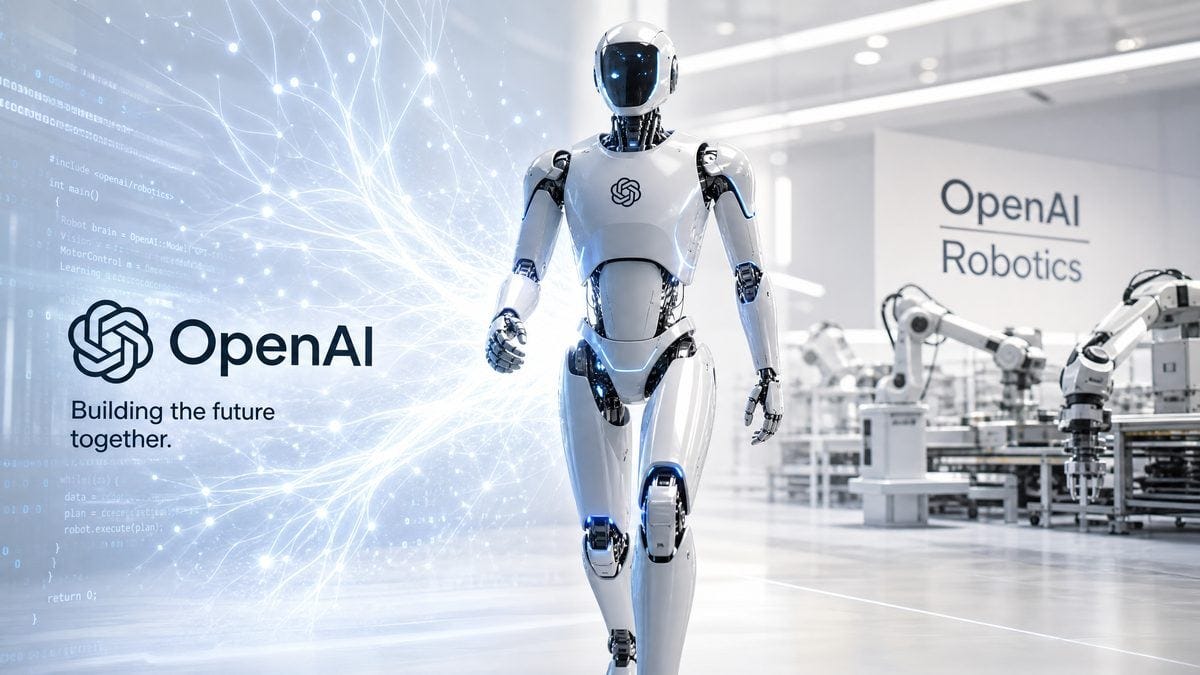
Robotics/Physical AI: This is an interesting one and one that OpenAI has already recently expanded into. In June Sam Altman announced a new physical AI division called “OpenAI Robotics”. The robotics branch is being built to design, program, and manufacture robots in the coming years. Sam Altman has framed the project around two ambitions. Their two goals are to “Program and manufacture robots” and to build “personal robots that can do anything you need.”18 With many people viewing robotics as the next area that takes off due to AI, this will be a fascinating area to track in the upcoming years. I put this into the long term TAM bucket because revenue generation (and certainly profits) will likely only happen down the line.
Healthcare: One last future TAM area that OpenAI can expand into is the healthcare/medicine sector. This is an area that OpenAI’s CFO Sarah Friar already said that OpenAI will expand into. In a blogpost from January of 2026, she mentioned that “The opportunity is large and immediate, especially in health, science, and enterprise, where better intelligence translates directly into better outcomes.”19 As OpenAI continues improving, there will likely be numerous health startups that partner with OpenAI and OpenAI might potentially even expand into creating some sort of AI lab - a project that can be similar to Google’s Isomorphic Labs.
The whole blogpost, which is brief and linked below is worth reading and gives insights into OpenAI’s long-term outlook from one of the leaders at the company.
I am able to continue pouring in dozens of hours into research because of reader support. If you would like to continue supporting my content, please consider upgrading to a paid subscription. Thank you.
Competition:
When it comes to OpenAI, they have two main types of competition.
Closed source models, most notably Anthropic and Gemini.
Open source models, i.e. a plethora of Chinese models that are currently racing closer to frontier models by the day.
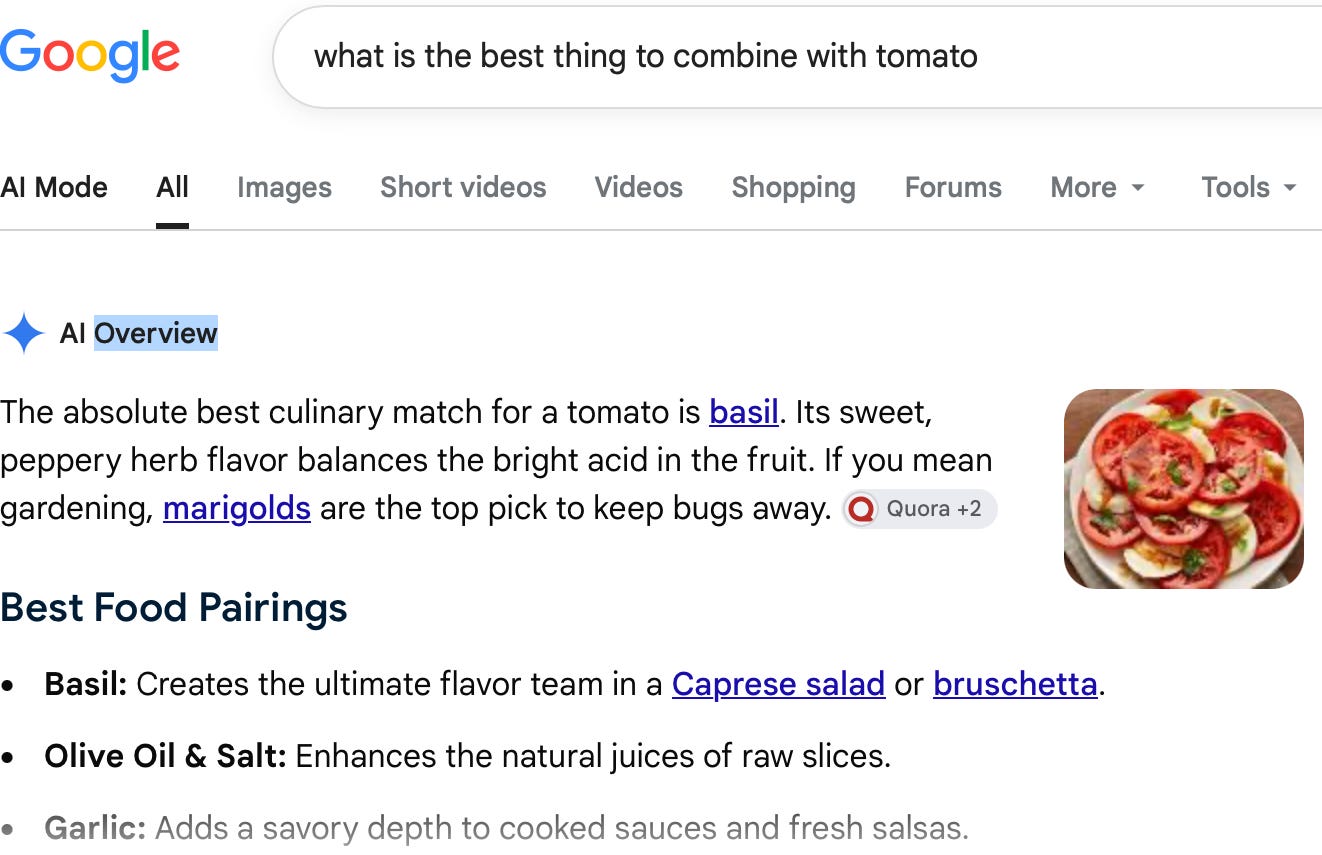
Anthropic, OpenAI’s most direct competitor, was actually founded from seven members of OpenAI’s team who left in order to start their own “ethical” AI. Today, OpenAI and Anthropic are the two leading companies with OpenAI leading in market share while Anthropic currently leads among enterprise customers. Alongside them, Google has its own model, Gemini. While consistently ranked behind other leading models, Google’s integration of Gemini into search has made it that many people will simply use Google’s “AI overview”.
The most recent data available has ChatGPT leading with roughly 67% of market share. Second comes Gemini with 21% of market share with the remaining models (Claude, Perplexity, Llama and more) sharing the remaining 12% of market share.
Among enterprise customers however, Menlo estimates that Anthropic leads with 40% of enterprise share.20 OpenAI is second with 27% of market share and Gemini comes in third with 21% of market share with the remaining 12% being split among other LLM models.
Notably, for first time AI spenders, Anthropic currently wins 70% of head-to-head matchups.21 In addition, Anthropic also extracts $16.20 per active user while ChatGPT only extracts $2.20 per active user.22 While this initially sounds like Anthropic is dominating, this discrepancy is likely due to the fact that Anthropic’s user base is significantly more likely to pay for the product while OpenAI’s user base often just uses the app casually.
However overall, Anthropic has clearly taken the lead being both valued higher and generating more revenue than OpenAI.
Another potential group of competitors is open source models. These models, which are usually slightly behind the frontier models are still extremely capable and can charge significantly less. Customers that have the option to use a similar model at a fraction of the cost may likely decide to switch to these open source models over time. If this happens, it would then force companies developing the frontier models to lower the cost of subscription plans further compressing already stressed margins.
If this happens, it will be hard for frontier model companies to justify raising billions (or even trillions) of dollars to pay for compute when open source models do a similar job for a fraction of the cost.
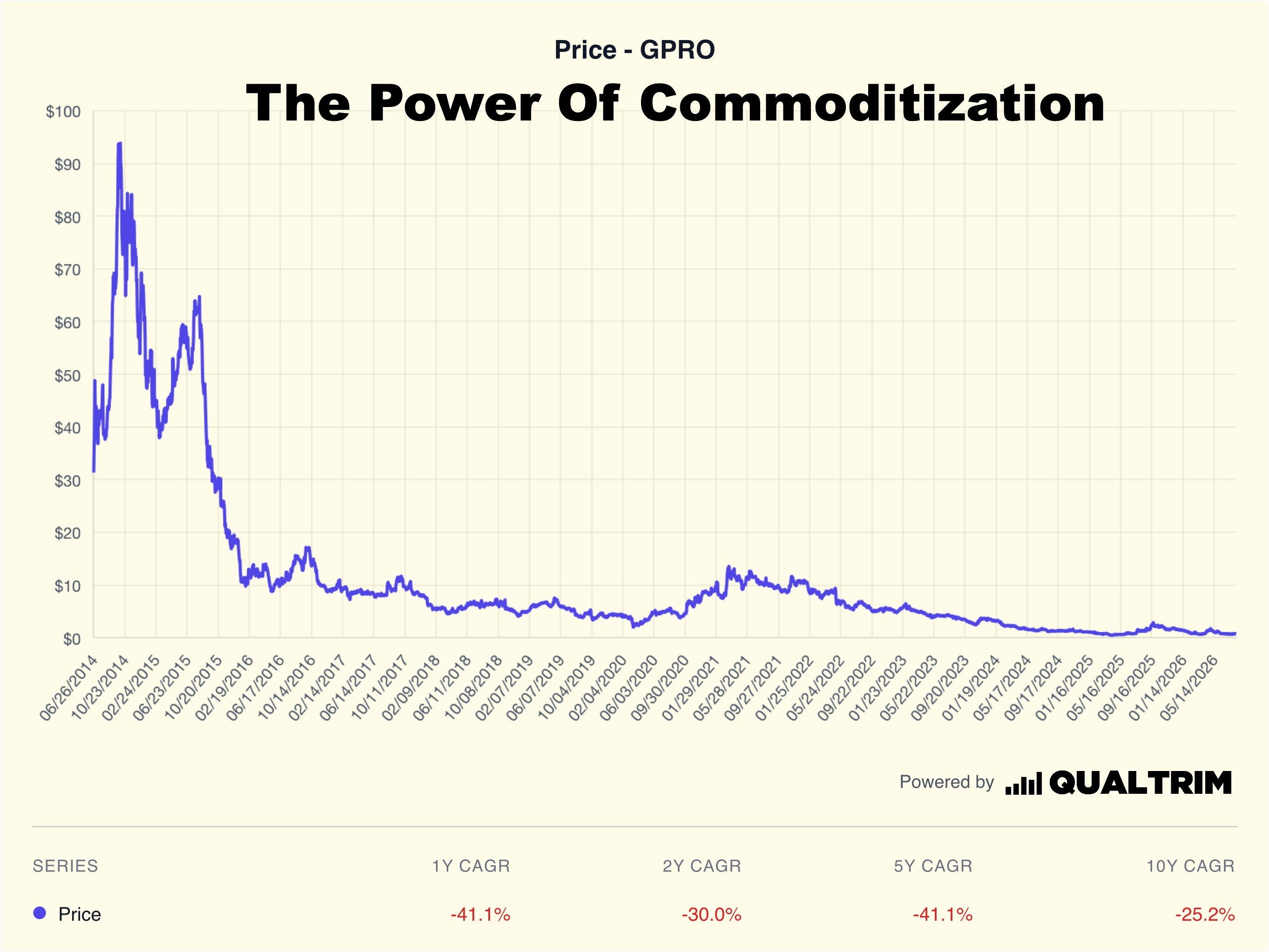
This could result in a crash similar to what happened to GoPro. GoPro originally released cameras that were revolutionary along with a strong brand. By 2014, they were worth roughly $11 billion. Unfortunately, as direct competition improved and smartphones improved their cameras, GoPro’s became increasingly less popular and the stock dropped accordingly. Today, GoPro’s stock is worth roughly $0.71, less than 1% of what it was worth at its peak. Noteworthy, GoPro was a significantly smaller technological innovation than AI, that being said, GoPro also wasn’t investing hundreds of billions into developing models.
Perhaps the most important question when it comes to LLM companies is whether or not one clear winner will emerge.
In the case of search for example, Google has emerged as a clear winner and its market dominance has hardly been challenged ever since they became the primary search engine.
Cloud on the other hand has had multiple winners. “The Big Three” - Amazon’s AWS, Google’s Cloud and Microsoft Azure have all emerged as winners and major players in cloud hosting with roughly 67% of market share.23 Along with these companies, there are other competitors who are also successful companies in their own right. Oracle and Alibaba both own roughly 4% of market share. Others like CoreWeave and Nebius are also valuable companies worth tens of billions in their own right.
Whether AI will emerge like Search with one obvious winner or more similar to Cloud with multiple winners is a question that only time will tell.
What we do know is that in the former scenario OpenAI has to be the winner while in the latter they can emerge as one of the winners. If the latter occurs, it is highly likely that OpenAI will prove to be one of the winners. If it is the former, Google currently has a huge advantage in their ability to directly reach the consumers, Anthropic currently has the advantage with the best models and open source models will be cheapest long term. ChatGPT’s current advantage i.e. market share can easily be eroded. If you don’t believe me, just ask Yahoo.
The Ethical Questions
The ethical questions surrounding OpenAI are numerous and I’ll try to cover a few of the major ones surrounding OpenAI specifically. During my Anthropic piece, I covered in depth many of the ethical questions surrounding AI as a whole, for those who haven’t seen them before I highly recommend reading that piece linked here.
One area that we have already covered was their transition from a non-profit to a for-profit, a transition so fundamental to the company that it forces the reader to ask what really is motivating the company. What began as a company trying to further AI for humanity turned into a company trying to grow profits for shareholders.
Unfortunately, the ethical questions don’t stop there.
With AI being one of the most dangerous technological advancements in decades, one must question the people running the leading companies.
In this case, while no one doubts the genius of those leading OpenAI and specifically Sam Altman, questions have been asked about many of the characters leading the company. Former board member Helen Toner went so far as to say that Sam Altman engaged in “Withholding information, misrepresenting things that were happening at the company, and, in some cases, outright lying to the board.” These culminated in a board decision to fire Sam Altman for his failure to be “consistently candid” although he was quickly reinstated only a few days later.
If OpenAI’s own board couldn’t trust Sam Altman to be truthful, it begs the question how we as the public trust him? OpenAI’s history of lawsuits don’t reflect kindly on the business either. While an Elon Musk lawsuit can be dismissed as just a “spiteful competitor”, it’s hard to continue dismissing lawsuits as they come most recently from Apple and the State of Florida.
In addition, a number of whistleblowers have come out against OpenAI alleging misconduct in everything from violating copyright laws to an open letter warning against prioritizing financial incentives ahead of safety oversight.24
Furthermore, when Anthropic decided to decline the White House’s request to use Claude without guardrails, Anthropic’s CEO Dario Amodei came out and said that he “cannot in good conscience” allow the government to use AI unregulated. Amodei was allegedly referring specifically to the red lines of autonomous killing and mass surveillance.
OpenAI then signed a deal a few days later with the government although Sam Altman and OpenAI claimed that they had the same red lines as Claude did. While the exact agreement was of course confidential, note the result: Anthropic being labeled a “supply chain risk” while OpenAI signed a lasting deal with the government.
“Ironically”, only a couple months later, OpenAI held preliminary talks to offer a 5% equity stake to the U.S. government worth tens of billions of dollars. While Sam Altman claimed that this is the best way to share the benefits of AI, this would cause a clear conflict of interest with regulators and would potentially give huge lobbying control to OpenAI not to mention potential surveillance risks that would automatically be possible if the government had additional access to OpenAI’s data.
Another area in which OpenAI has been accused of using data without authorization is in order to train its own models. Additionally, a joint investigation from Canadian privacy regulators found a number of privacy issues that were present when looking at ChatGPT specifically.25
Including: Overcollection of personal information; lack of valid consent and transparency; factual inaccuracies involving personal information; issues related to individuals’ ability to access, correct and delete their personal information; and a lack of accountability for the personal information under OpenAI’s control.
These aren’t the only data breaches that OpenAI has been accused of. There have now been over thirty lawsuits against them from authors, publishers and news organizations (including previously the New York Times) alleging that OpenAI has been training their models on data without the consent of the authors themselves.2627 Many of these lawsuits end in settlements and “data licensing” agreements but this doesn’t solve this ethical question, it just gives authors some way to monetize their content without it being totally ripped off.28
Valuation:
As with any company, the final question comes down to valuation. OpenAI is currently valued at $852 billion after their most recent funding round in March 2026. But since then, at the time this valuation placed OpenAI at a 31.7x valuation to revenue multiple. A few months later, OpenAI’s rapid revenue growth places them at a much lower (albeit still high) 20.6x valuation to revenue multiple. For reference, Anthropic is currently trading at a 13x valuation/revenue multiple.
Usually, companies that are growing revenue this quickly (doubling ARR within six months) aren’t companies worth almost a trillion dollars and are therefore seen as growth stories with huge potential. One of the reasons why it is so hard to evaluate OpenAI is because of this exact issue. The law of large numbers usually implies that companies will slow down when they grow but both OpenAI and (especially) Anthropic seem to be bucking this trend.
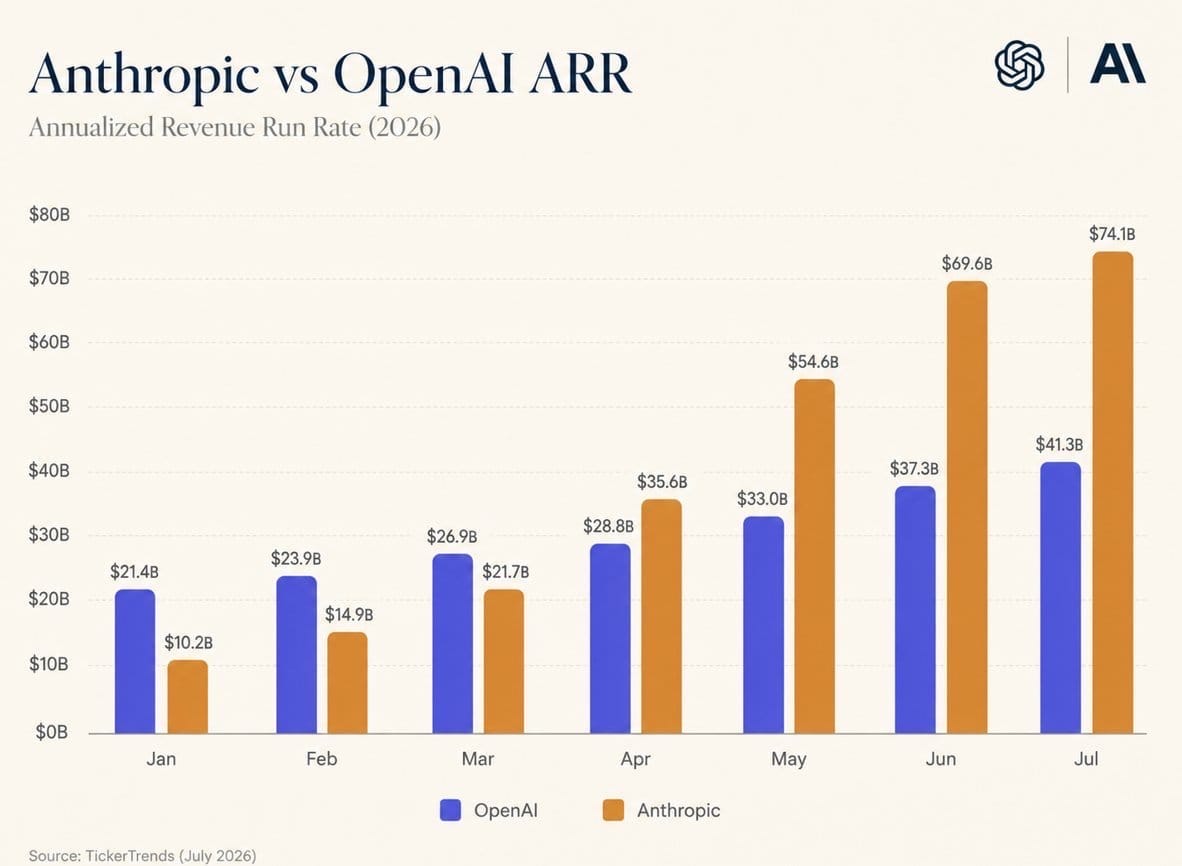
If OpenAI is able to double their revenue again in the next six months (or even in the upcoming year), all of a sudden the revenue multiples start looking significantly more attractive.
Of course, revenue is only one piece of the puzzle. OpenAI currently is cash-flow negative due to expenses rising faster than revenue. The revised numbers now have them only being cash-flow positive in 2030, a year behind previous estimates. Cumulative cash burn up to that point is expected to be a whopping $665 billion by 2030.29 At the same time, they project to generate $284 billion meaning overall they will be hundreds of billions of dollars in the negative.
In the words of Alpha with AI:
“You cannot put a P/E on this company, and I have stopped trying…. The company says it is growing revenue faster again this summer and I believe it. The question the S-1 has to answer is the cost of producing that revenue, because every generation of models has been more expensive to train and to run than the last one.”
This is a conscious decision by the company to spend $2.30 in exchange for every $1 that it earns. The goal is that by 2030, the company turns positive and the early years of burning cash are rewarded with huge profits. This is a playbook that Amazon managed to achieve, remaining unprofitable for nine years from its inception in 1994 to its first year of profitability in 2004.
An interesting development that has come out as of today (August 11th) is that OpenAI is actually buying back $7 billion worth of employee stock. This perhaps implies that OpenAI isn’t as strapped for cash as previously believed. Additionally, it also reduces pressure to IPO as employees can cash out privately.
Whether or not OpenAI is a bet that is worth it is likely a larger question on your macro outlook on AI in general. The risks are clear, a huge cash burn rate, competition from every direction and a business model that isn’t proven yet. On the other hand, you have a business that is dominating market share in the most important product of our generation, a massive potential TAM that they can expand into and a management team that despite major hiccups has managed to maintain that dominance. For now, I think the easy gains are off the table and I personally will be waiting for the S-1 filing to delve deeper into the business and its financials.
Who is funding OpenAI currently?
OpenAI is backed by some of the largest names in the venture capital world including investments from Andreessen Horowitz, MGX and Sequoia Capital.
In addition, their largest “investor” is Microsoft, which currently owns 27% of OpenAI. Since 2019, Microsoft has been an incredibly strategic partner that has been investing into OpenAI, both through integrating OpenAI’s models into Azure (Microsoft’s cloud hosting platform) and through investing capital directly. In addition, Microsoft’s integration of GPT into Microsoft’s Copilot is a strategic partnership between the two mega giants.
Besides for that, OpenAI also has key investments and partnerships from Amazon, Nvidia and SoftBank.
The Nvidia partnership, announced in September of 2025 includes an investment of up to $100 billion from Nvidia into OpenAI and allows OpenAI to build and deploy 10 or more gigawatts of AI datacenter using Nvidia chips. Nvidia originally invested $30 billion into OpenAI although recently Jensen Huang, the CEO of Nvidia, has slightly changed his tune about this deal with more recent statements calling the partnership an “opportunity to invest” rather than a commitment.30
“It was never a commitment. They invited us to invest up to $100 billion and of course, we were, we were very happy and honored that they invited us, but we will invest one step at a time." - Jensen Huang
Many have since speculated that Jensen might have less faith in OpenAI than when Nvidia originally signed the deal almost a year ago.
Amazon’s partnership, announced in November of 2025 was highly controversial due to OpenAI’s previous promise to Microsoft to remain exclusive. Allegedly, Microsoft even considered legal options against OpenAI although no lawsuit has happened as of yet.31 The result was a $38 billion commitment from OpenAI to “rapidly expand compute capacity” using AWS.
Sacra estimates that OpenAI has now raised $178 billion in funding with an additional $250 billion announced in funding. These massive funding rounds mean investors are likely putting pressure on OpenAI to go public, something that OpenAI is already in the process of doing.
The IPO
Back in 2023, Sam Altman said that OpenAI has no desire to go public in the near future. This was likely due to their “strange structure” that capped their profits.32 Two years later in October of 2025 after officially transitioning OpenAI into a “for-profit” company, Sam Altman said about an IPO that: “I think it’s fair to say that it’s the most likely path for us given the capital needs that we’ll have.”33
In December of 2025, Altman said that he’s 0% excited to be the CEO of a public company, clearly implying that OpenAI will go public in the (near?) future. A month later in January of 2026, media reported that OpenAI was seeking a potential IPO towards the end of 2026 with hopes to go public before Anthropic.34
On June 8th 2026 came the breakthrough moment, OpenAI officially confidentially filed an S-1 to the SEC.35
“We recently submitted a confidential S-1. We expect it to leak so we’re just announcing it. We have not decided on timing yet; it may be a while because there are things we want to do that are likely easier as a private company. But it’s a complicated set of tradeoffs and this gives us the option to go public sooner if that ends up being best.” - OpenAI
A few weeks later, the New York Times reported that OpenAI was likely to delay their IPO until next year speaking to three people involved in the decision-making.
Likely their numerous lawsuits, internal company disputes and potential competing IPOs with SpaceX and Anthropic are all factors in this.
Still, this is a company burning cash at a rate that they likely will need public funding relatively soon. While the IPO date likely won’t happen this calendar year, it is hard to imagine that a company as large as OpenAI will stay private for long and their IPO will likely happen in 2027.
Whether they go public this year or next, I will make sure to have an in-depth post about everything surrounding their IPO in the weeks before they go public.
If you enjoyed this piece, please consider subscribing so you can read my future work. Your support allows me to continue writing these breakdowns.
Thank you.
Disclaimer: This piece is for informational and educational purposes only and isn’t financial, investment, legal, or tax advice. Nothing in this article should be taken as a recommendation to buy, sell, or hold any security. I’ve done my best to make the information accurate and well researched, but I can’t guarantee that everything is complete or error-free. As always, do your own research and speak with a qualified professional before making investment decisions. For transparency, I don’t own any OpenAI shares or other position in the company, and I wasn’t paid or commissioned by OpenAI to write this piece.
I directly quoted Sam Altman who despite his brilliance seems to not want to use capital letters.
This was a record that would be broken the following year by Threads who achieved one million users within a few hours.
https://www.reuters.com/technology/chatgpt-sets-record-fastest-growing-user-base-analyst-note-2023-02-01/
https://www.reuters.com/technology/chatgpt-app-hits-1-billion-monthly-active-users-record-time-data-shows-2026-06-02/
“The Background” Is taken in part from my Anthropic article although there are some changes that I have applied. This isn’t because of a lack of effort but because I genuinely thought I wrote it well there and rewriting for the sake of rewriting felt childish.
https://edition.cnn.com/2026/02/26/business/block-layoffs-ai-jack-dorsey
The quote below is from OpenAI’s original introduction back in December of 2015. https://openai.com/index/introducing-openai/
Ironically, the first thing checking your resume is likely another LLM which leads to a Catch-22 where in order to have the highest chance of getting a job you should use an AI model.
Musk originally claimed to have given $100 million before revising the number to $50 million. Public records show that the number is truly anywhere between $15 million to $38 million, still a ton of money.
https://techcrunch.com/2023/05/17/elon-musk-used-to-say-he-put-100m-in-openai-but-now-its-50m-here-are-the-receipts/
https://www.pbs.org/newshour/nation/jury-sides-with-openai-saying-elon-musks-lawsuit-was-not-filed-on-time
https://cybercultural.com/p/google-1999/
Note, TAM is usually for an industry as a whole not just for one company. OpenAI’s TAM = possible revenue not actual revenue.
Note, ARR numbers can sometimes be misleading and private AI startups like Anthropic and OpenAI have been known to “game the system” and hallucinate numbers.
https://breakingintowallstreet.com/kb/venture-capital/carr-vs-arr/
This number is an estimate based on my best guess and most up to date data. As I learned from my Anthropic post which I wrote in late April, AI companies are currently growing so quickly that financial numbers written in one month are often entirely off a few months later.
https://techstartups.com/2026/07/15/these-19-ai-startups-are-generating-18-3-billion-in-annual-revenue-and-are-worth-a-combined-319-billion/
Note, it seems that in the past few years Sam Altman has learned about capitalisation! Of course just joking :P
https://finance.yahoo.com/sectors/technology/articles/openai-projects-2-5-billion-115959443.html
An important caveat to note is that Emarketer only looked at U.S. advertising revenue while OpenAI’s projections looked at global revenue.
https://www.emarketer.com/content/chatgpt-ad-revenues-may-fall-90--short-of-openai-s-2030-target
https://finance.yahoo.com/news/openai-faces-700bn-tam-2030-134335216.html
https://chatgptaihub.com/openai-robotics-division-sam-altman-physical-ai-2026/
https://openai.com/index/a-business-that-scales-with-the-value-of-intelligence/
https://menlovc.com/perspective/2025-the-state-of-generative-ai-in-the-enterprise/
https://aibusinessweekly.net/p/ai-market-share-2026
https://www.theregister.com/2026/04/30/openai_anthropic_top_lines_research_counterpoint/
https://www.srgresearch.com/articles/q2-cloud-market-passes-143-billion-highest-growth-rate-in-eight-years
https://whistleblowersblog.org/corporate-whistleblowers/open-letter-from-openai-employees-highlights-concerns-around-oversight-and-whistleblower-protections/
https://www.priv.gc.ca/en/opc-news/news-and-announcements/2026/nr-c_260506?utm_source=chatgpt.com
https://www.nytimes.com/2023/12/27/business/media/new-york-times-open-ai-microsoft-lawsuit.html
https://pressgazette.co.uk/platforms/news-publisher-ai-deals-lawsuits-openai-google/
Note to authors: For those on Substack who don’t want to have their articles fed into different AI’s as training data, Substack automatically sends articles published on the platform to AI’s unless users opt out. For those who want to block AI’s from using their articles, the link below explains how to turn it off.
https://support.substack.com/hc/en-us/articles/20382615953556-How-can-I-block-AI-from-using-my-Substack-publication-to-train-their-models
https://mlq.ai/news/openai-revises-projections-upward-with-112-billion-extra-cash-burn-by-2030/
https://www.bloomberg.com/news/articles/2026-02-01/openai-investment-was-never-a-commitment-nvidia-s-huang-says
https://www.reuters.com/technology/microsoft-weighs-legal-action-over-50-billion-amazon-openai-cloud-deal-ft-2026-03-18/
https://www.reuters.com/technology/openai-ceo-has-no-ipo-plan-due-strange-company-structure-2023-06-06/
https://www.forbes.com/sites/the-prompt/2025/10/30/openai-plans-for-ipo/
https://www.marketwatch.com/story/openai-reportedly-eyeing-an-ipo-by-years-end-ahead-of-anthropic-7feb3766
Note, “confidentially” doesn’t mean secretly, it’s just the term used due to the information being submitted being kept confidential from the public and competition.
https://openai.com/index/openai-submits-confidential-s-1/
It was an extremely well researched breakdown. API revenue is a double edge sword for both Anthropic and OpenAI, as chinese labs continue to bring better models at a fraction of price. Performance gap is like 19 and 20 now, though the extent of this parity is probably debatable.
Strong breakdown. The three-bucket TAM structure, current, near-future, long-term, is exactly the discipline this space usually skips, most pieces just blend it into one scary headline number the way SpaceX's own S-1 did. Really liked that part, Joseph.
One thing worth asking: you argue enterprise stickiness is the real war, but your own numbers show Anthropic already leading enterprise share and winning most new-customer matchups. Does that mean OpenAI's holding the bigger number in the fight that matters less?